


The EU-funded HYDREAMS project is a comprehensive study which considers the impact of transitioning from natural gas to clean hydrogen in steel production processes.
By Swiss Steel
The steel industry is one of the world’s largest CO2 emitters, contributing around 8% of global CO2 emissions.
A particularly challenging area is the thermal steel processes, which were responsible for up to 39 billion tons of CO2 emissions globally in 2021 due to natural gas combustion. Can hydrogen be the solution for this emission-heavy sector?
As part of the HYDREAMS project, Swiss Steel Group is taking an important step in this direction. The project, funded by the European Union in April 2023, aims to explore how the steel industry can transition from natural gas to clean hydrogen, significantly reducing its carbon footprint. The project focuses on two types of furnaces (reheating and annealing) and two burner types (impulse and flat flame systems) to test hydrogen combustion’s efficiency in steel production.
From natural gas to hydrogen
The HYDREAMS project is the first comprehensive attempt to study the effects of hydrogen combustion on various steel grades. To date, no extensive studies have investigated the physical changes and potential deviations in steel properties when hydrogen is used instead of natural gas, such as differences in flame velocity, radiance, or exhaust gas composition.
“Replacing natural gas with hydrogen in thermal processing is still not mature enough and poses potential risks – including increased NOx emissions and possible negative effects on steel quality and furnace refractory life,” explains Laurent Sieye, Sustainability Manager Ugitech, Swiss Steel Group “That’s precisely what we aim to investigate and address in the HYDREAMS project.”
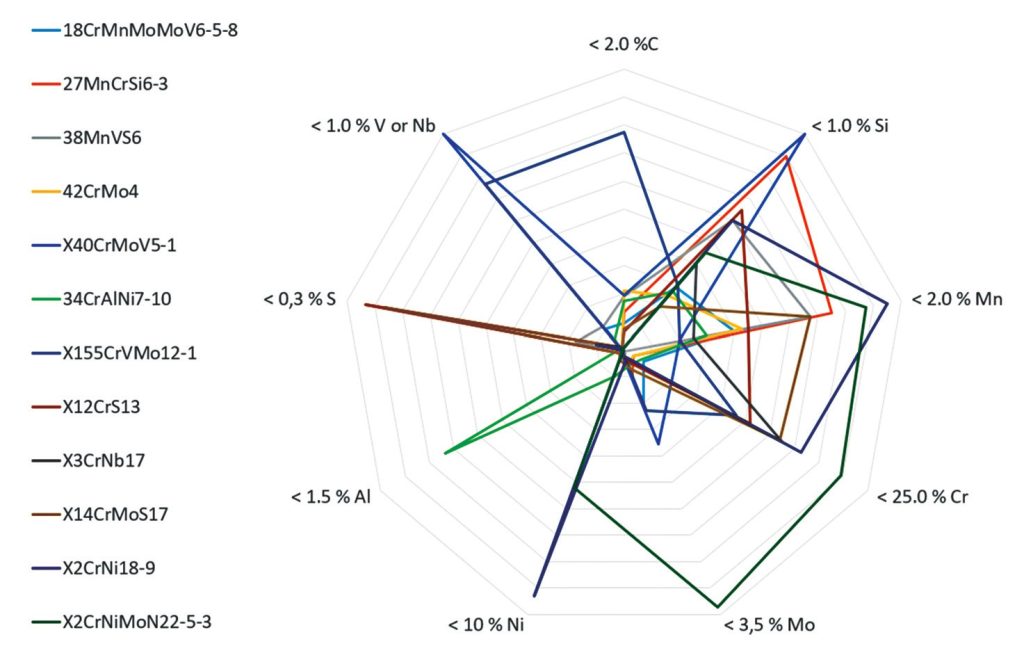
The project is progressing in multiple stages, starting with laboratory tests in pilot furnaces, followed by CFD simulations, furnace modeling, and industrial demonstration trials. In the first phase, tests were conducted with 13 different steel grades, and no structural differences or changes in composition were observed in the steel samples after heating with air/natural gas, air/hydrogen, oxy/natural gas, and oxy/hydrogen.
Climate change mitigation
Over the next few years, the HYDREAMS project will conduct a series of industrial trials. Three demonstrators for different heating processes and product types (blooms, forged bars, and coils) are planned. The commissioning of the first demonstrator (DEMO 3) is scheduled for March 2025, with the first bloom trials taking place this summer. DEMO 1 and DEMO 2 will begin in 2026.
The project aligns with the EU’s climate change mitigation and steel industry decarbonisation priorities. This solution could also offer an alternative to electric heating, which presents technical challenges in specific applications, such as excessive wear of electric resistances at high temperatures or poor temperature homogenization within the furnace.
In addition to technical findings, the project will provide safety assessments, life cycle analysis (LCA), and cost analysis, all of which will be vital for future market deployment.
About Swiss Steel Group
Swiss Steel Group, headquartered in Emmenbrücke (Switzerland), is one of the world’s leading manufacturers of special long steel products. Thanks to the exclusive use of steel scrap in electric arc furnaces, the Group is one of the most relevant companies in Europe in the field of the circular economy and is one of the market leaders in the field of sustainably produced steel.
About this Tech Article
Appearing in the November 2025 issue of Stainless Steel World Magazine, this technical article is just one of many insightful articles we publish. Subscribe today to receive 10 issues a year, available monthly in print and digital formats. – SUBSCRIPTIONS TO OUR DIGITAL VERSION ARE NOW FREE.
Every week we share a new technical articles with our Stainless Steel community. Join us and let’s share your technical articles on Stainless Steel World online and in print.