


At its best, architecture functions to express the highest aspirations of humanity. Civilisation is partially defined by the existence of beauty in public spaces, but there are also practical considerations. We want our buildings to last and be sustainable as we transition away from fossil fuels towards a carbon-emissions-free future. Stainless steel plays a role in all three spheres: it is beautiful, long-lasting and can help achieve “green” goals.
By James Chater
Outlook
With all the uncertainty generated by current US tariffs and other policies, it is hard to gain a clear outlook for the ABC (architecture, building and construction) sector. In the USA, the sector was boosted by President Biden’s Inflation Reduction Act (2022), which provided funds to overhaul the USA’s crumbling infrastructure. Likewise, his CHIPS Act of the same year provided the means to return the manufacture of hi-tech goods to the USA. However, President Trump has fiercely criticised the latter, so its future seems uncertain. If uncertainty reigns in the USA, the outlook in Europe is downright weak, though green projects will no doubt fare better than in the USA1. European cities (especially in Poland and Germany) have been rediscovering their heritage, tearing down some of the brutalist buildings dating from just after World War II and replacing them with more traditional buildings. Another important trend is végétalisation, the creation of pedestrian- and bicycle-friendly spaces and the planting of trees.
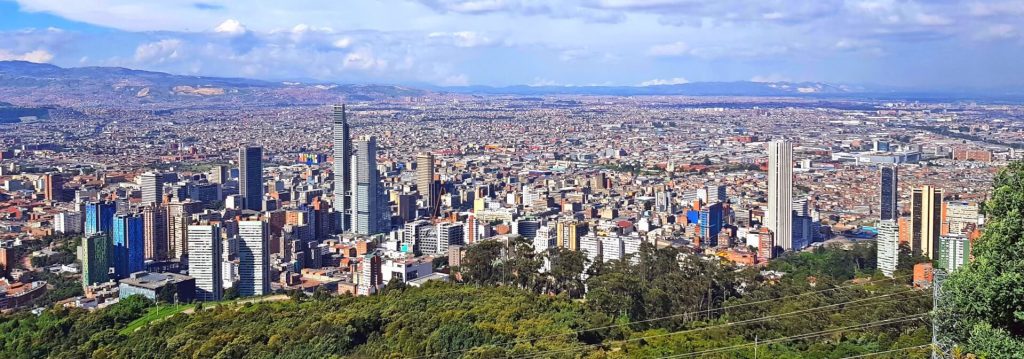
Urbanisation is continuing apace in the high-growth economies of South America, Asia and Africa. For instance, Colombia’s capital Bogotá is in the final stages of a vast renewal programme. Other Latin American cities are renewing also, leading to a surge in demand for stainless-steel decorative strips2. Many ambitious projects round the world are announced, included transport systems, roads, bridges, airports and industrial parks. Among the largest are the Bogotá Urban Renewal (nearing completion), Saudi Arabia’s building of hotels on the Red Sea, India’s Chennai-Bangalore and Delhi-Mumbai industrial corridors and the Gujarat International Finance Tec-City (GIFT). Manila is building a new airport and a metro/transit system, while high-speed rail is coming to Thailand. Whole new cities have been announced in Egypt (around Cairo), Nigeria and Ethiopia. Plans are not always followed through, and delays are common, but if only some of these projects get built, the trend towards urbanisation in these high-growth economies is still clear.
Causa pulchritudinis
Beauty remains among the chief motivations for using stainless steel and titanium in buildings. The architectural star Frank Gehry is famous for his use of these materials in the Guggenheim Museum in Bilbao and other buildings. We are still waiting to know what is in store, material-wise, in the Guggenheim Museum in Abu Dhabi, set to open this year after a long delay. However, the same architect’s Forma Towers (Toronto; projected completion in 2028) will have a distinct texture, with a surface consisting of blocks of rippling, folding stainless-steel cladding offset by smooth glass.
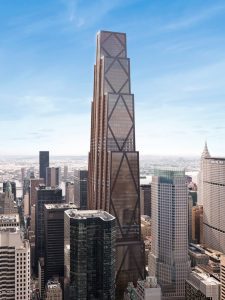
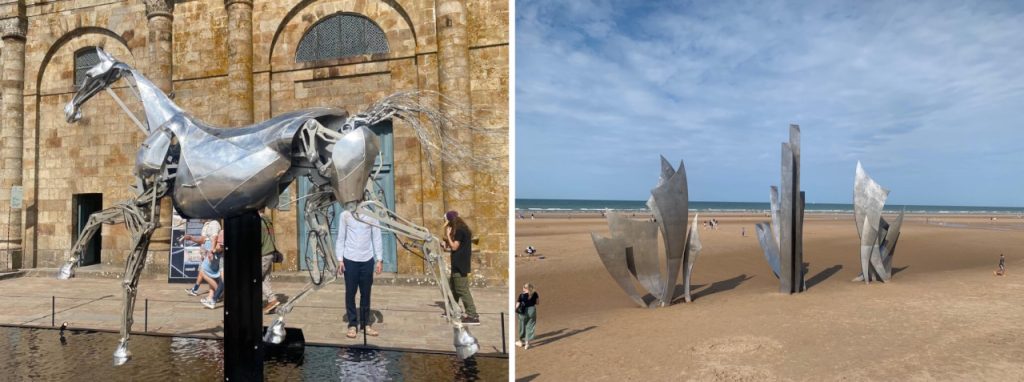
Two other buildings due to be completed this year are Navi Mumbai Airport, Mumbai’s second, shaped like a lotus and featuring a curved steel frame and stainless-steel arches; and 270 Park Avenue, the new HQ of JP Morgan Chase in New York, a skyscraper with stainless-steel mullions against a background of grey glass and black steel panels. Sculpture also plays a role in bearing public witness to humanity’s highest ideals and aspirations. The Paris Olympics last year gave rise to Zeus, a mechanical horse that has been doing the rounds in France this year. This celebration of speed is made of silver, stainless steel and aluminium. Also new is Les Braves II: At Water’s Edge, by Anilore Banon, dedicated on the grounds of the War Memorial Association (Grosse Pointe, USA) on 25 May 2023. It is a replica of the same artist’s Les Braves, a monument to liberty celebrating the landing of US soldiers at Omaha Beach in June 1944.
Utilitatis causa
Stainless steel is also used for utilitarian reasons: its durability reduces costs in the long term, it provides corrosion resistance and is strong in comparison with its weight, making it easier to transport and install, while providing structural support when needed.
This support often takes the form of reinforcement bars embedded in concrete, also called rebar. Stainless steel rebar is being applied in many construction projects. The UK’s HS2 London-to-Birmingham high-speed railway uses stainless rebar supplied by Nationwide for its bridges, tunnels and tracks. It is also used in the splash zone of the majestic inverted-Y towers of the Gordie Howe International Bridge, which connects Windsor in Canada to Detroit in the USA. A further example of structural support can be found in the Florida Brightline project, where the shear loading transfer requirement for the deck slab superstructure at the Miami Station posed a problem.
A Double Shear Dowel system was devised, made of duplex stainless steel.
Pro bono publico
Finally, stainless steel is applied in construction to meet certain environmental requirements. Nowadays, architects must comply with increasing regulations and conventions that promote sustainability, energy efficiency, and low or non-existent carbon emissions. Stainless steel is often preferred because of its recyclability, resistance to corrosion and weathering, ability to absorb heat, hygienic properties due to its smooth, non-porous surface and suitability in water management systems, among other reasons.
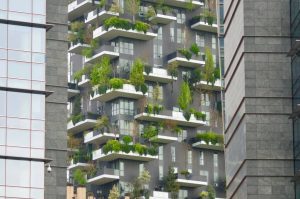
Green roofs and vertical forests can act as carbon sinks and help reduce the build-up of heat in urban environments. Green roofs contain planted trees and shrubs that create water run-off once the soil can no longer absorb the water. Drains, pipes and tanks made of stainless steel are the most effective way to regulate the water flow. Vertical forests, or buildings clad in vegetation, are not only ecologically sound but also beautiful. The term “vertical forest” was coined when Boeri Studio designed a tower in Milan with ninety plant species, including tall shrubs and trees, distributed on the façades. Boeri later designed similar structures in the Netherlands, Switzerland and China, and many countries have followed suit.
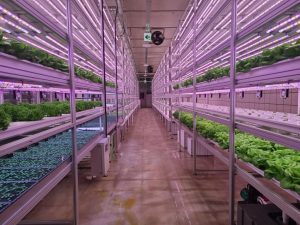
In such buildings, stainless steel is used in various ways; in irrigation systems, clamps and supports, or cables that act as “tutors” that allow vines to spread over façades. These green façades can be constructed indoors as well as outdoors: for instance, Tensile supplied stainless-steel wire for an indoor green façade in Christchurch, New Zealand. Finally, stainless steel plays a role in an important transformation affecting food production. In dense urban areas, the distance and expense involved in transporting food to where it is needed has driven the development of urban, indoor farms. These structures grow crops in vertically and horizontally stacked layers, in an environment that is strictly controlled, using LED lighting and closely controlled temperature and water supply. Despite high initial costs, the crop yield per square metre of land is considerably higher than in traditional farming. Another major advantage is resistance to extreme weather conditions such as storms and drought – an important consideration in a time of climate change.
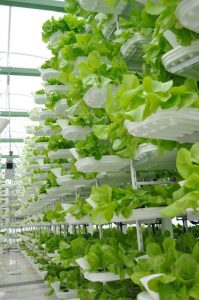
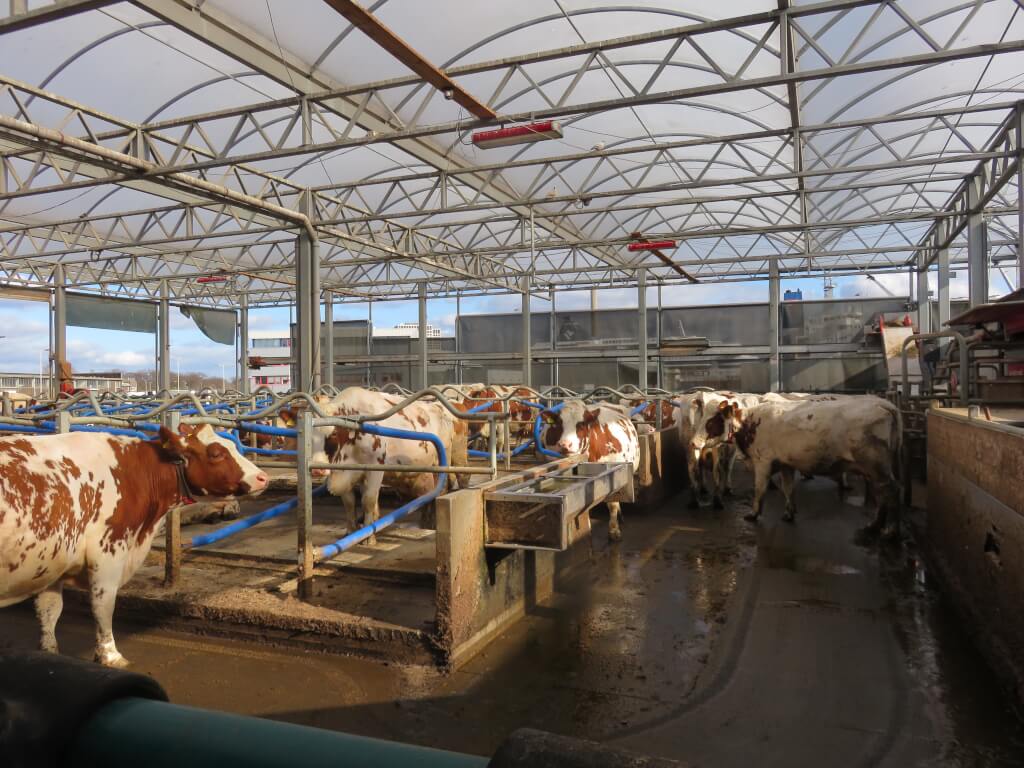
The concept has been around since 1999 and has flourished in cities such as Singapore, Osaka, Tokyo, Dubai and Rotterdam, all densely populated areas facing environmental challenges. The Dutch city of Rotterdam has even seen the construction of a floating farm to combat the danger of flooding as sea levels rise, while Norway’s floating greenhouse, Ocean Bloom, grows fresh food using fish waste as a fertiliser, at the same time purifying seawater and generating renewable energy.
Vertical farms can be hydroponic, aeroponic or aquaponic. In a hydroponic system, the crops are fed by nutrient-rich water; with aeroponics, the crops are fed by nutrient-rich mist; aquaponic farms cultivate fish as well as plants, the fish providing the plants with nutrients while the plants, in turn, filter the water for the fish.
In indoor farms, stainless steel is ideal because of its properties of cleanliness and hygiene, and its ability to handle water and support the weight of the plants, water and grow medium. Austenitic grades such as types 303 or 316 are often applied to the grow trays attached to the racks, allowing drainage of the water in a hygienic and corrosion-free environment. Irrigation pipes and frames use either PVC or stainless steel.
Conclusion
Whether lending beauty to a structure, ensuring its longevity through superior life-cycle cost savings, contributing to a more carbon-neutral environment, or mitigating the effects of climate change, stainless steel will continue to play a crucial role in architecture and construction.
About this Featured Story
Appearing in the October 2025 issue of Stainless Steel World, this Featured Story is just one of many insightful articles we publish. Subscribe today to receive 10 issues a year, available monthly in print and digital formats. – SUBSCRIPTIONS TO OUR DIGITAL VERSION ARE NOW FREE.
Every week we share a new Featured Story with our Stainless Steel community. Join us and let’s share your Featured Story on Stainless Steel World online and in print.