


Alleima is a long-established leader in advanced tubular products, with roots dating back to 1862 and steel production beginning in 1921. From the start, the company has relied on recycled scrap as its main raw material, combining metallurgical expertise with a strong sustainability focus. Today, Alleima’s position is built on close, long-term partnerships with customers and a continuous stream of high-performance materials tailored to demanding applications across multiple industries. This article explores how Alleima’s technical marketing, R&D, and local sales teams work together to deliver optimised material solutions and support customers through the energy transition.
By Joanne McIntyre, Stainless Steel World
“Helping our customers source the most suitable products, grades, and materials for their projects is at the heart of what we do,” begins Barinder. “While the sales team provides commercial support, Technical Marketing works behind the scenes, and together face-to-face with the customers, liaising between R&D and the market, evaluating new products and bringing them to customers.
“We identify gaps where new materials can either perform better or be more cost-effective. A recent example is Sanicro™ 35, a grade that bridges the gap between super-austenitic alloys and high-nickel alloys. Before this innovation, the only option in many of these applications was a costly high-nickel alloy.”
“Our technical team understands end users’ corrosion problems and asset lifecycles. For example, if we see heat-exchanger tube bundles being replaced every two or three years, we analyse the process conditions and propose alternative material solutions. It’s a joint effort between sales, technical marketing, and our customers. Alleima is one of the few companies that offers this level of support, creating a genuine win–win for the end user, the fabricator, and ourselves.”
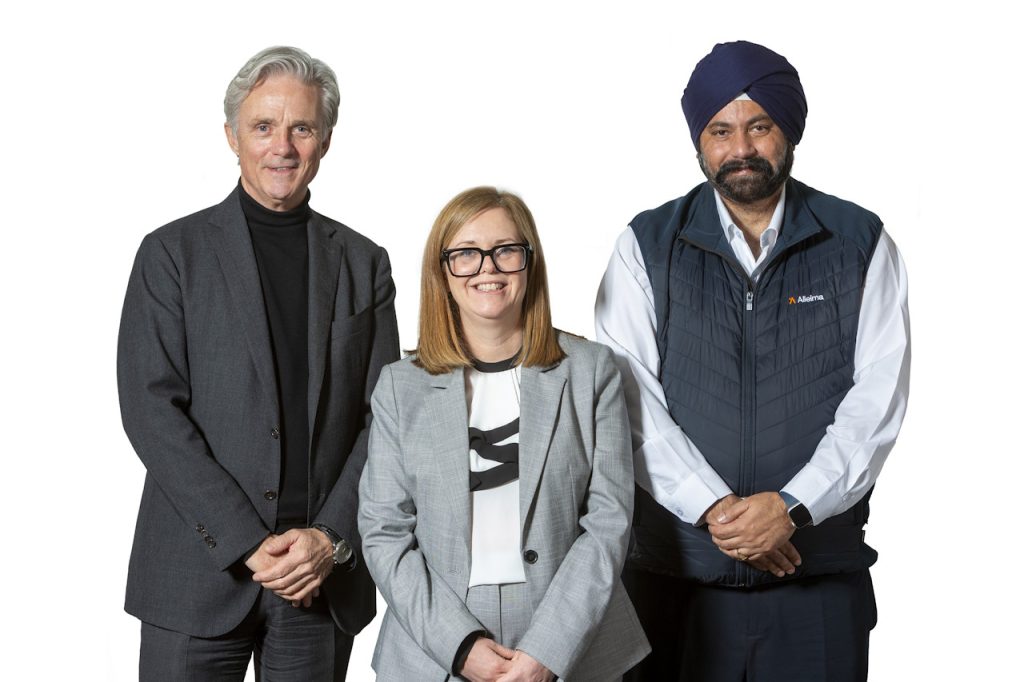
Meet the Alleima team:
- Barinder Ghai, Director Technical Marketing & New Business Development EMEA Region
- Hans Boudewijn, Regional Sales Director Benelux, France, Iberia, Italy, Adriatic & Turkey
- Helen Harvey, Regional Sales Director UK & IRL
Successful collaborations
Hans highlights a successful collaboration that has driven innovation and improved project outcomes for the end user. “A few years ago, we met a customer building a critical gasifier to convert organic residues which were waste materials into, among other things, Green Gas, Green Hydrogen and Green CO2. The operating conditions were extremely demanding, so our Technical Marketing team engaged with them to find a suitable material.”
“We proposed a grade with significantly higher corrosion resistance under very high-pressure, high-temperature conditions. Those tubes are now installed in the first pilot plant, and we anticipate strong future demand for this type of Green Gas, Green Hydrogen and Green CO2.”
Barinder continues: “Another case is the Preem refinery in Sweden. Our sales and Technical Marketing teams approached the EPC and the licensor a couple of years ago and identified Sanicro™ 35 as an ideal solution instead of high-nickel alloys. Preem became one of the first biofuel references for Sanicro 35.”
“We have similar successes in the Middle East, where coordinated work between sales and Technical Marketing has opened doors at key end user companies. This shared approach across the product lifecycle is extremely effective.”
Supporting customers with lower carbon materials
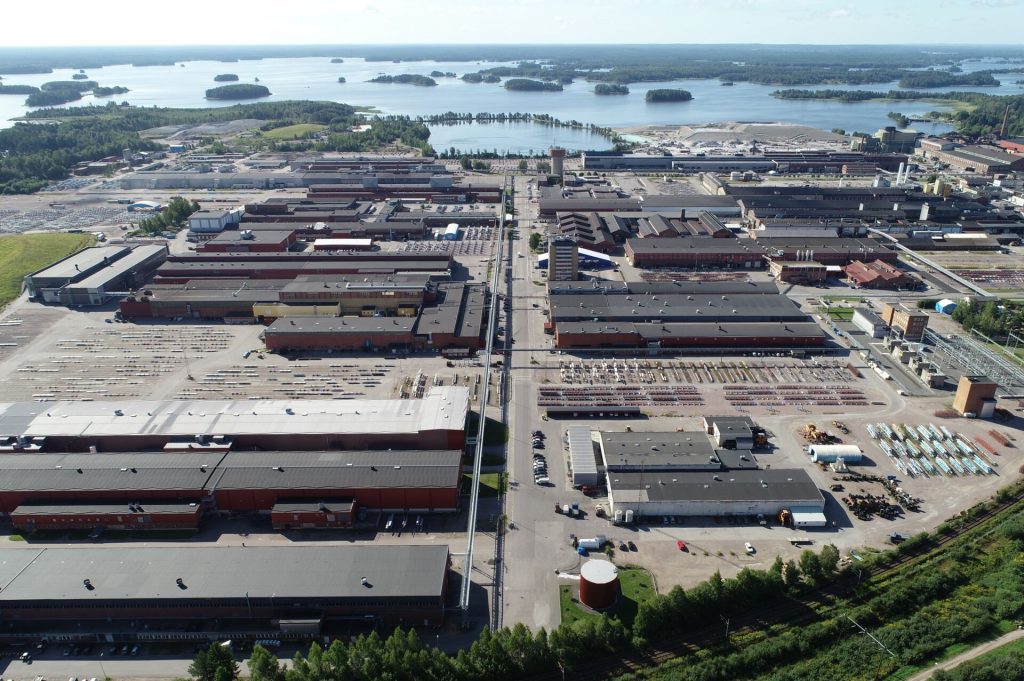
“Reducing our carbon footprint is a challenge for everyone – our customers and our own operations alike,” says Helen. “We increasingly receive requests for Life Cycle Assessment (LCA) data, which evaluates environmental impact from cradle to gate: from raw material extraction to the finished product at the customer’s site. At our Sandviken mill, we use more than 80% recycled scrap, melt in an electric arc furnace, and run on 100% fossil-free electricity, so our emissions are extremely low compared with many European competitors and only a fraction of typical Asian manufacturers. All data is verified by independent LCA experts, and we are proud to hold an EcoVadis Gold rating.”
Barinder adds: “Our LCA certificates give customers precise CO2 data for each grade, and we consider Scope 1, 2 and 3 emissions, with a strong focus on Scope 3 from raw materials and upstream activities. If we supply tubes to a fabricator who also has a strong EcoVadis rating, the footprint of the final equipment can be very low. In Europe especially, end users are targeting Scope 3 reductions, which requires real collaboration. By working closely with partners, we can significantly cut the total footprint of equipment – and Sanicro™ 35 is a good example of combining high technical performance with low carbon impact.”
The Alleima Buyback Program is another tool to reduce CO2. It allows the company to buy back its own scrap from fabricators and end users. Hans: “Because we know exactly what we supplied, we also know the composition and quality of the material we are buying back. The premium we pay helps fabricators and end users obtain a better price for their scrap, while giving us a high-quality raw-material stream. It’s an opportunity for us to offer something extra to the customer.”
Understanding regional energy transition needs
“When Alleima decided to focus on renewables as part of our 2030–2050 decarbonisation targets, we selected six key segments, biofuels and hydrogen are two key focus areas,” explains Barinder. “Global teams map projects worldwide to understand the processes involved, particularly in biofuels, and extensive training is provided. This is a strong example of how we coordinate sales, technical marketing, and R&D.”
“There is a lot of groundwork in preparing materials and understanding processes. Our salespeople play a crucial role: whenever they receive an enquiry related to a process moving from fossil to renewable fuels, they flag it for the team. Recent examples include our visits to EPC Contractors and end users where several refineries are converting from fossil to biofuel operations. The focus on renewables differs by region: China is very active in solar, the Americas in geothermal, while hydrogen and biofuels are particularly important in Germany and the UK.”
“The local teams identify the segments active in their region and the support they need. When a process changes, the corrosion challenges change as well, which often creates the need for a different material – and that is precisely where we can add value.”
Enabling the energy transition
Helen continues: “Each team has a clear focus that links directly to energy-transition projects in their region. These segments are rapidly evolving, so a strong local presence is essential. You need people on the ground who understand the market, follow the projects, and know how customer needs are shifting.”
For example, hydrogen instrumentation (HI) products are widely used in the hydrogen industry. Scotland is undergoing significant growth in H₂ applications, from fuelling stations to 26 hydrogen-powered buses operating in the Aberdeen area.
“Our long-standing customers there know our products well, so they approached us to discuss their transition into the renewable energy sector.”
“Another example is a customer we’ve worked with since the 1970s who operated a coal-fired power station. Today, they are heavily involved in bioenergy, using fuels such as woodchip pellets and biofuels, and we have supported them throughout that transition. Our tubes are still used in their processes, even though the fuel has completely changed. It has been a decade-long journey to help them become fully fossil-free. This illustrates how important relationships are for both new and existing customers.”
The Alleima sales team are skilled at identifying where developments in biofuels and sustainable aviation fuel (SAF) are taking place. “Our close contact with customers across industries gives us a good overview of their planned investments and the grades they will require,” adds Hans. “We regularly host Customer Days to present our new materials and discuss their applications.”

Engaging with global events and organisations
Attending local events is an important part of each teams strategy. “For example, our UK team joined a series of roadshow events to meet existing customers and new players entering the energy transition markets,” explains Helen. “This is a great way to meet people with new ideas and technologies. We learn from them as much as they learn from us. It’s an excellent way to show how our materials can drive innovation and support sustainability across the energy transition.”
“Events such as Stainless Steel World, Duplex World, and Heat Exchanger World are key for us,” continues Barinder. “They highlight the latest trends and technologies and bring us into contact with a wide range of stakeholders.”
“We’re also very active within the Materials Technology Institute (MTI) and AMPP, where we work closely with corrosion research specialists. Both MTI and AMPP bring together technical experts and academia, and supports many of our testing activities. Alleima hosts webinars for both AMPP and MTI, and sometimes invite members to visit our mills in Sweden and Czech Republic.”
“These interactions are important not only to showcase our products, but also because visitors can see first-hand what differentiates Alleima: our focus on health and safety, our seamless production processes, and our precision. Seeing is believing.”
About this Featured Story
Appearing in the Stainless Steel World January 2026 issue, this Featured Story is just one of many insightful articles we publish. Subscribe today to receive 10 issues a year, available monthly in print and digital formats. – SUBSCRIPTIONS TO OUR DIGITAL VERSION ARE NOW FREE.
Every week we share a new Featured Story with our Stainless Steel community. Join us and let’s share your Featured Story on Stainless Steel World online and in print.