



Reliable pressure instrumentation is key to safe, optimal urea plant performance. The presence of extremely corrosive ammonium carbamate creates very difficult conditions for pressure and level instrumentation to perform well in the long run, i.e., for more than four years, especially in high and medium pressure sections.
By Guido Geurts, Stamicarbon (Nextchem) and Ricardas Razgaitis, Badotherm
Corrosive carbamate environments are commonly found in the high, medium and low-pressure synthesis (HP, MP, LP) sections of urea plants. Carbamate, especially in the HP synthesis section, is highly corrosive, even to stainless steel. For delicate diaphragms used for pressure and differential pressure measurements, this proves to be an even bigger challenge, there is (almost) no corrosion allowance as the diaphragm’s thickness is near 100 µm (0.1 mm/0.004 inch). The conditions are even tougher for diaphragms in the vapour phase of such sections due to a phenomenon called condensation corrosion.
The repair/replacement of a failed diaphragm-type pressure or differential pressure instrument usually requires shutting down the process or the process unit. This leads to expensive downtime, capacity turn down or even potentially unsafe operations.
The problem
It used to be an unofficial industry standard that mechanical diaphragm seal systems for pressure and level measurement in the urea HP – and even in the MP – sections would last up to two years.
After this period, they typically needed replacement, sometimes leading to unplanned plant shutdowns and significant production losses. Replacement could take 1–2 days, as the failed instrument had to be removed and a new one from stock installed.
In extreme cases, when a redundant instrument was unavailable as a spare, repair and replacement could take up to 7 days. However, this unofficial industry standard from a decade ago is no longer acceptable. Modern urea plants now operate with turnaround cycles of 4–5 years, meaning that pressure and level transmitters are expected to perform continuously for at least five years of non-stop operation in both HP and MP sections.
Our solution
Based on the exceptional corrosion properties of the E-Type stainless steel material, full E-Type stainless steel specially treated thin foil diaphragms for pressure and differential pressure measurements in (carbamate) corrosive environments are used to make extended mechanical diaphragm seal systems by BADOTHERM. For this, an innovation consortium was formed among Stamicarbon, Alleima (formerly Sandvik Material Technology, the co-inventor of E-Type stainless steel), and Badotherm, a leading manufacturer of high-quality process instrumentation from the Netherlands.
These full-body extended diaphragms with all wetted parts in E-Type stainless steel come at a competitive price and have been available on the market for 3 years. End-users from North America, the Middle East, North Africa and Asia are already using E-Type stainless steel Remote Seal Systems in their urea processes.
Design features
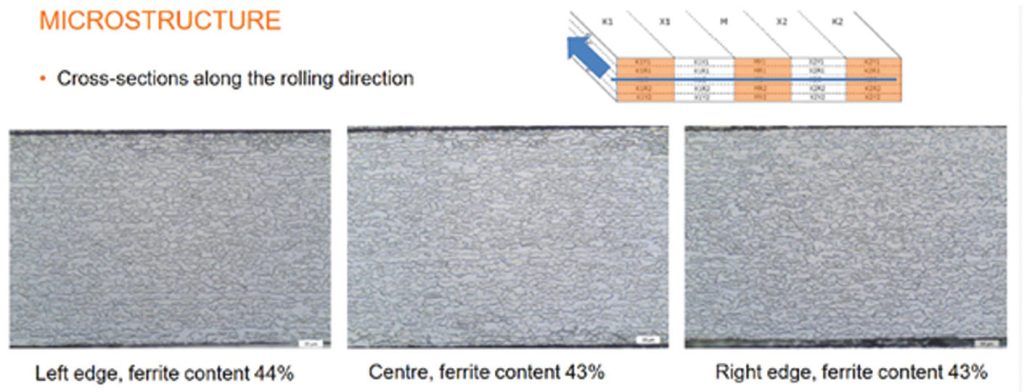
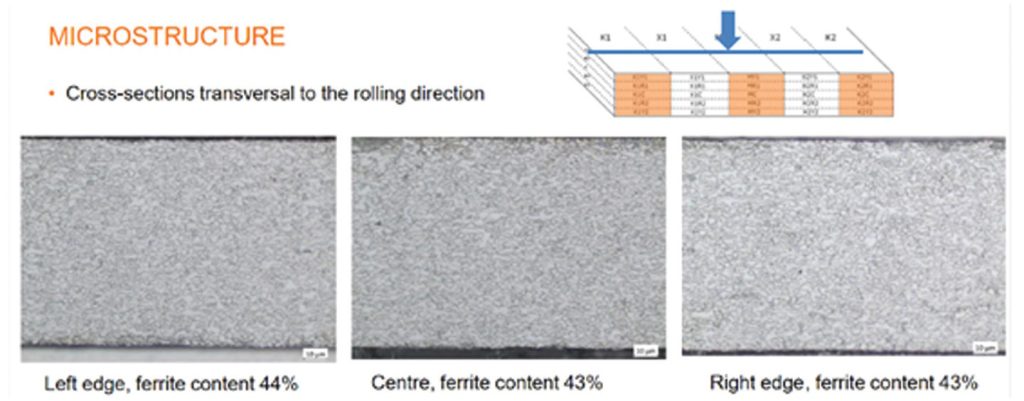
All wetted parts are made from E-Type stainless steel, and the diaphragm is welded to a full body (extended type). The E-Type stainless steel diaphragm (100 µm/0.1 mm/0.004 inch) with a very fine grain structure is a prerequisite for excellent corrosion resistance (Figures 1 & 2).
The E-Type stainless steel diaphragm is ductile and flexible enough for the application as a diaphragm seal in (differential) pressure applications. Speciality welding is used to bond E-Type stainless steel diaphragm to the full E-Type stainless steel extension body. Metallurgical examination showed extremely low corrosion of the diaphragm and weld (refer to Figure 3).
There is excellent microstructure in the foil, HAZ and weld metal.
The (extended) diaphragms are designed according to Badotherm FSO-EXT and FSO-BF or to custom specifications.
About E-type Stainless Steel
In 1996, Alleima (formerly Sandvik) and Stamicarbon, the nitrogen technology licensor of NEXTCHEM (MAIRE Group), introduced Safurex® (UNS S32906), a super duplex stainless steel specifically developed for urea service. Safurex® has established an excellent track record since its introduction and has shown several advantages over traditionally used austenitic stainless steels in urea plants. The material demonstrates superior corrosion resistance at low oxygen levels. Active corrosion has never been observed in any Safurex® urea equipment, even in the absence of passivation air.
Condensation corrosion in the vapor phase, crevice corrosion, chloride-induced stress corrosion cracking (SCC) and strain-induced intergranular cracking (SIIC) have never been a problem in plants that use equipment made of Safurex®, as the material is practically immune to these forms of corrosion.
As from 2024, Safurex® is referred to as E-Type stainless steel. This term will further be used in this article.
Thin foil development
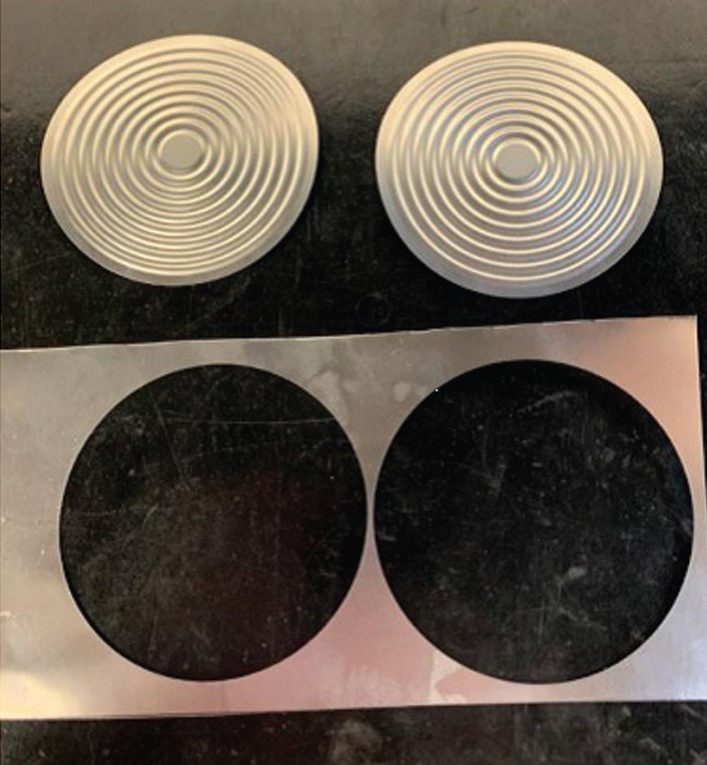
As the manufacturer of E-Type stainless steel, Alleima was the partner to lead the development of the thin foil (100 µm/0.1 mm/0.004 inch). Based on their specific knowledge of the material, its properties, and possible processing steps, they developed a reproducible processing sequence to manufacture thin foil meeting the required specifications.
To achieve the correct formulation, the governing (and conflicting) parameters had to be balanced:
- For the manufacturing of the diaphragm, the ductility and weldability of the foil;
- For the accurate operation of a diaphragm seal type measurement, the flexibility of the diaphragm;
- For reliable operations, the longevity and thus the corrosion resistance of the diaphragm seal (refer to Figure 3).
| Item | Microstructure | Depth (μm) | ||
| General | Max | |||
| HAZ | Disc | The selective attack occured via austenite phase constituent and secondary austenite at the ferrite – ferritegrain boundaries | 15-20 | 52 |
| Diaphragm | Compared to the base material, there is almost no deviation and/or pecularities. The selective attack occured via austenite phase. | 2-5 | ≤5 | |
| Weld | Relative coarse grained solidification microstructure of mostly ferrite and a network of acicular austenite at the grain boundaries. Locally an interdendritic solidification defect was present near the fusion line. | 1-2 | 81 | |
| In any direction ≤ 100μm | ||||
Table 1. Typical result of the microscopic examination of a E-Type stainless steel sample after autoclave exposure
Welding diaphragm to body
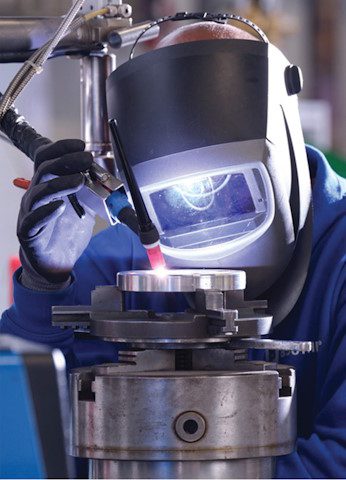
Badotherm and Stamicarbon developed a preliminary welding procedure specification (pWPS) to fuse the thin E-Type stainless steel diaphragm to a full E-Type stainless steel body, machined from bar (refer to Figure 4).
A suitable pWPS was developed, and under the supervision of Lloyd’s and Stamicarbon, the pWPS, in a test welding session, was promoted to WPS.
After additional corrosion testing (Streicher) of the welds, the welding procedure qualification record (WPQR) was also certified, and Badotherm welders were certified by Lloyd’s and Stamicarbon.
Autoclave corrosion testing
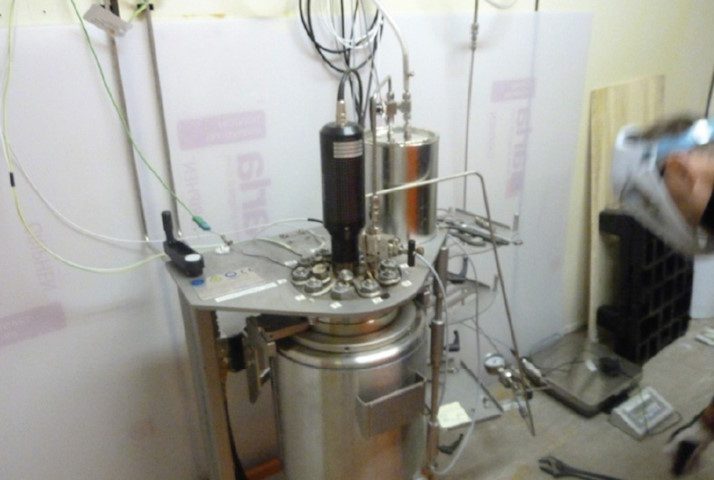
Although the Streicher test is a good method for evaluating the general corrosion resistance of steels, it has been shown to be insufficiently selective/predictive to distinguish the corrosion-resistant properties of steels under carbamate conditions. Therefore, a more selective test was required, exposing the welded samples to a severe HP urea synthesis carbamate environment. Such a test had to be performed in a specialised autoclave. Autoclave test setup (refer to Figure 5): The equipment used to evaluate corrosion resistance in ammonium carbamate was an existing, dedicated autoclave. The autoclave was rated at a maximum pressure of 300 bar (4350 psi) and a maximum temperature of 250°C (482 °F). It was equipped with an agitator to continuously replenish the liquid at the specimen surface and maintain a homogeneous environment for all samples. During the test, the autoclave was monitored and controlled from a separate room, except during loading and evacuation, which were always performed at ambient pressure and temperature.
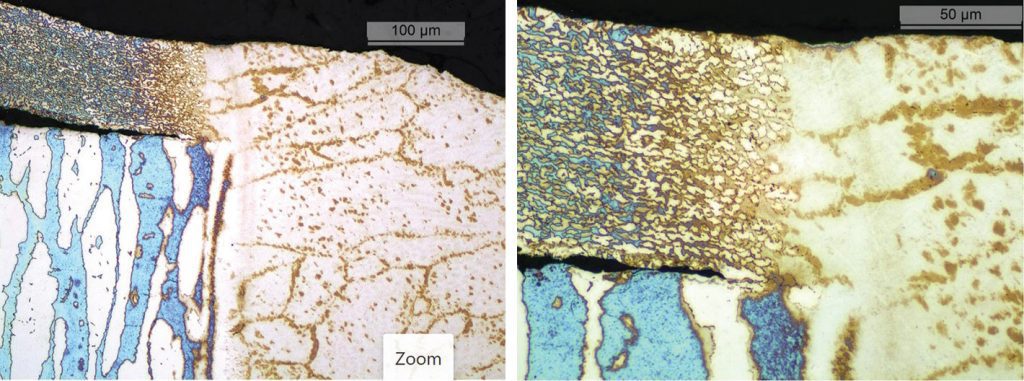
The autoclave was loaded with the chemicals, calculated to simulate the concentration of ammonium carbamate expected in an HP synthesis under extreme operating conditions of 170 bar (2466 psi) and 205°C (401 °F), without oxygen. In total, six specimens were exposed for 330 hours (~14 days) in the test batch. Two (2) E-Type stainless steel, two (2) zirconium 702 and two (2) AISI 310MoLN (25-22-2). From microscopic examination (refer to Figures 6 & 7), it became clear that the (already very low) weight loss of the E-Type stainless steel samples originated predominantly from the E-Type stainless steel body part (disc), machined from E-Type stainless steel bar material and that the diaphragm showed only very slight attack. Refer to Table 1 for a summary of the microscopic examinations.
The corrosion observed on the diaphragms was predominantly at the cross-cut end, due to sample cutting. Such a cross-cut does not exist when the diaphragm is applied as an operational process seal.
Furthermore, in the autoclave test, both sides of the diaphragm were exposed due to the cutting. An attack on an operational process seal will occur only on one side.
The very low corrosion of the diaphragm can be explained by its microstructure, which shows a much finer grain than that of the disc, made of forged bar E-Type stainless steel. This is clearly illustrated in Figures 1 and 2.
Conclusions:
- Alleima, Badotherm, and Stamicarbon have jointly developed thin-foil E-Type stainless steel diaphragms for pressure and differential pressure measurements.
- These are cost-effective and improved alternatives for (differential) pressure measurements in urea plants.
- E-Type stainless steel can now be used as the single material of choice for applications in the urea synthesis environment.
- E-Type stainless steel diaphragms can also be specified for other (MP and LP) sections of the urea and melamine plant and for other processes suffering from (carbamate) corrosion.
- E-Type stainless steel PT/dP/LT diaphragm seal systems are cost-effective (CAPEX & OPEX).
References
- Nitrogen + Syngas 2023 International Conference & Exhibition (Barcelona 6- 8 March 2023). By Guido Geurts, Stamicarbon, The Netherlands.
- Badotherm on-line blog 2025, Netherlands: https://www.badotherm.com/blog/
- Points of Attention for Applying Pressure measurements with Diaphragm Seals in Urea Plants (2018, November v4). By Mark Brouwer, UreaKnowHow, The Netherlands.
About this Featured Story
First appearing in the February 2026 issue of Stainless Steel World magazine, this Featured Story is just one of many insightful articles we publish. Subscribe today to receive 10 issues a year, available monthly in print and digital formats. – SUBSCRIPTIONS TO OUR DIGITAL VERSION ARE NOW FREE.
Every week we share a new Featured Story with our Stainless Steel community. Join us and let’s share your Featured Story on Stainless Steel World online and in print.