


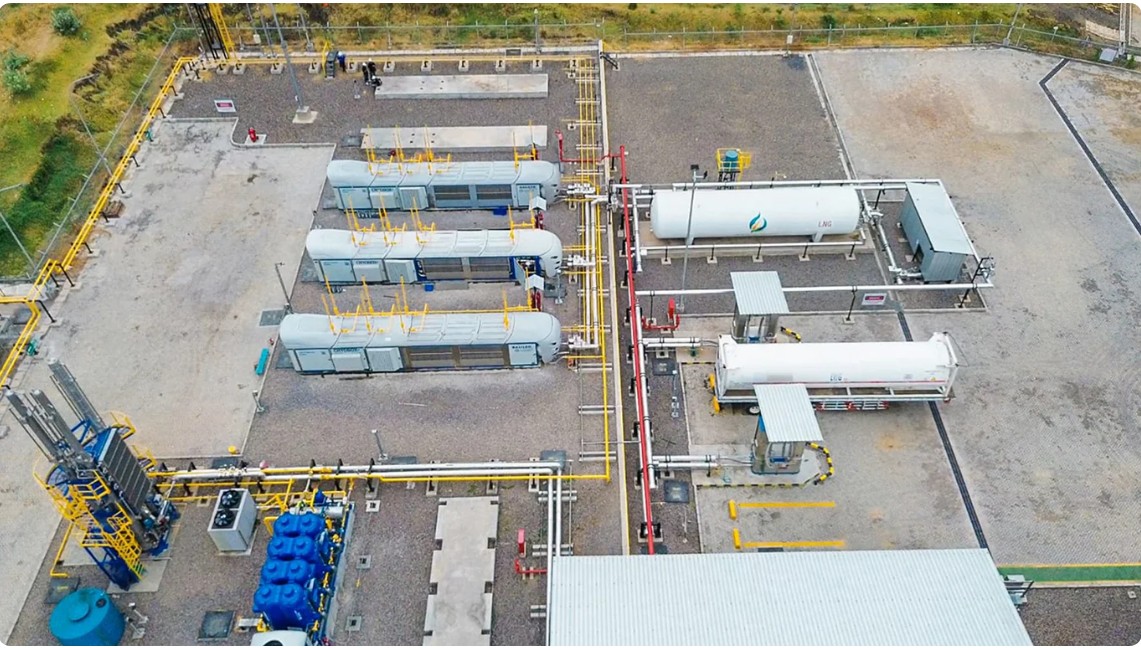
Indonesia has officially inaugurated its first modular micro-LNG plant, a landmark project developed by PT Likuid Nusantara Gas (PT LNG) utilizing Galileo Technologies’ proprietary Cryobox™ technology. This installation represents a strategic breakthrough for the region, proving that innovation isn’t an option—it’s our standard for overcoming geographical barriers.
The new facility allows for the distribution of natural gas to remote areas without the need for traditional pipeline infrastructure. Equipped with three Cryobox™ units, the plant processes approximately 2.47 million standard cubic feet (70,000 m³) of natural gas daily, producing over 40 tons of Liquefied Natural Gas (LNG) per day.
For Indonesia, an archipelago comprising more than 15,000 islands, traditional gas pipeline infrastructure is often limited or economically unviable. Galileo’s technology provides a flexible solution by liquefying natural gas directly at the wellhead.
The system is based on a disruptive concept: reducing natural gas volume by 600 times through liquefaction. This enables the creation of a Virtual Pipeline™, transporting energy via ISO tanks to the island of Bali to replace heavier, more expensive, and polluting fuels.
The success of the Pasuruan plant has triggered immediate expansion. Galileo Technologies confirmed a new agreement for a second, larger-scale liquefaction plant on the island of Kalimantan. This new facility will have a processing capacity exceeding 6 million standard cubic feet (170,000 m³) of gas per day, scheduled to be operational by the first quarter of 2027.